





Analyte Depleted Serum
Analyte Depleted Serum
Specific analyte depletion from normal human base materials including immunoglobulin depleted serum having wide applicability as a negative base for serology assays
Our specific analyte depleted, pooled normal human serum/plasma has levels below that of the most sensitive test methods. Our range of analyte depleted, normal human serum products use well defined, optically clear 0.2µm filtered off the clot serum or processed plasma as base material. The range is specifically designed for critical applications where a highly demanding specification is required.
Products
| Product Name | Code | Type | Applications | |
|---|---|---|---|---|
| Immunoglobulin G | FGM01466 | Antigens/Proteins | Biosensor, Clinical Chemistry, Control Manufacture, ELISA, Life Sciences | Buy now |
| Immunoglobulin G Depleted Processed Serum | SF142-7 | Serology | Buy now | |
| T3/T4 Depleted Processed Serum | SF231-7 | Thyroid Markers | Buy now | |
| Testosterone Depleted Serum | SF518-7A | Hormones | Buy now | |
| Steroid Depleted Processed Serum | SF236-7 | Hormones | Buy now | |
| Vitamin D Depleted Processed Serum | SF504-7A | Vitamin | Buy now |
Brochure
Products & Services
Inside this catalog you’ll find one of the industry’s broadest collections of enzymes, antibodies, antigens, and more – meticulously developed to power world-class diagnostics and keep your pipeline moving.
Download
What range of Serum and plasma products are available from BBI, what are they generally used for?
BBI supplies the following human serum and plasma products:
- Pooled normal human serum and plasma for use as calibrator/control bases and product testing
- Pooled specific disease state plasma used for calibrators/controls for immunology products
- Analyte depleted serum and plasma used as negative base for calibrators/controls
What is the difference between serum and plasma?
Plasma and serum are both the liquid portion of blood that remains once the cells are removed.
Plasma is the liquid that is formed when the cellular components are removed, and clotting is prevented with the addition of an anticoagulant. There may be residual anticoagulant remaining in the plasma.
Serum is the liquid that remains after the blood has been allowed to clot, then the cellular components are removed. It does not contain fibrinogens as these are removed as part of the blood clot. The resulting serum will not contain any anticoagulant.
What volumes of serum and plasma products are available?
Typical volumes depend on the specific product however in general individual unit volumes for Disease state plasma range between 1ml samples and up to 1L however generally these are available as 200- 240ml remnants and 850-950ml units with samples of 1-5ml. Depleted serums and pooled normal human serums are available in lots of up to 50L.
Are the Disease state plasma serum and plasma products sourced by BBI from plasmapheresis or are they “remnant” materials collected from blood transfusion and other procedures?
Disease state serums and plasmas are collected as remnants and as plasmapheresis units, the availability is specific to the analyte. Please contact your account manager or customer service for details.
How are the analyte levels determined in BBI serum and plasma products?
Specific immunoassays are normally used to determine the levels of the analytes. These are specified on the Certificate of Analysis. In some cases it is possible to offer an alternative method to those stated, please contact your account manager for details. In certain cases, the materials are tested by LC-MS (Liquid chromatography mass spectroscopy).
Are samples available from all serum and plasma prior to purchase?
Plasma and serum samples can normally be provided; however to ensure that the product is likely to meet the requirement it is essential to agree the titre requirement and testing methodology, as well as any other specifications, prior to sampling. Units of the bulk can be held for a maximum of 3 months pending sample approval.
How do I store and transport the material?
Serums and plasmas should be stored below -15°C and the use of dry ice is recommended for shipping. Repeated freeze-thaw cycles should be avoided as this can cause the material to become “cloudy” due to residual Fibrinolysis.
Where do BBI collect the serum and plasma?
BBI’s Serum and plasma is collected at hospitals and blood banks worldwide, specific sources can be used if requested however bespoke collections can take additional time to facilitate. Most pooled normal human serum and plasma and depleted serum are from US sourced paid blood donations.
How are the units screened for infectious disease markers?
Most of our products are screened for the current World Health Organisation (WHO) list of recognised infectious agents (https://www.who.int/bloodsafety/ScreeningDonatedBloodforTransfusion.pdf) and the results are listed on the product C of A, however as they are derived from human materials they should be treated as potentially hazardous and only handled in laboratories with appropriate biological containment facilities. Some Disease State Plasma products may be positive for specific infectious agents which will be reported on the product Certificate of Analysis. These materials should be handled in laboratories with appropriate biological containment facilities.
How can I get further information about the product?
Technical information and product specifications can be found in the product-specific Certificate of Analysis and the Product Information Sheet. If any further technical information is required, this can be requested by emailing technicalsupport@bbisolutions.com or contacting customer services.
Request a sample
Superior performance
Our streamlined range of analyte depleted serum products offers superior performance, with analyte levels below the limit of detection for most assays. Serum/plasma products are sourced from US licenced plasma collection facilities. The material is shipped to BBI for processing where BBI uses a range of proprietary methodologies including ligand affinity techniques to reduce the specified analyte content to very low levels.
After processing, the material is 0.2µm filtered and stored pending fill. The processed material is tested using state-of-the-art methods defined by the analyte to check that the specification has been reached. The material is filled under laminar flow into defined aliquots and stored frozen in clear plastic bottles. The base serum protein concentration is, where necessary, returned to a normal level.
Uses of Analyte Depleted Serum
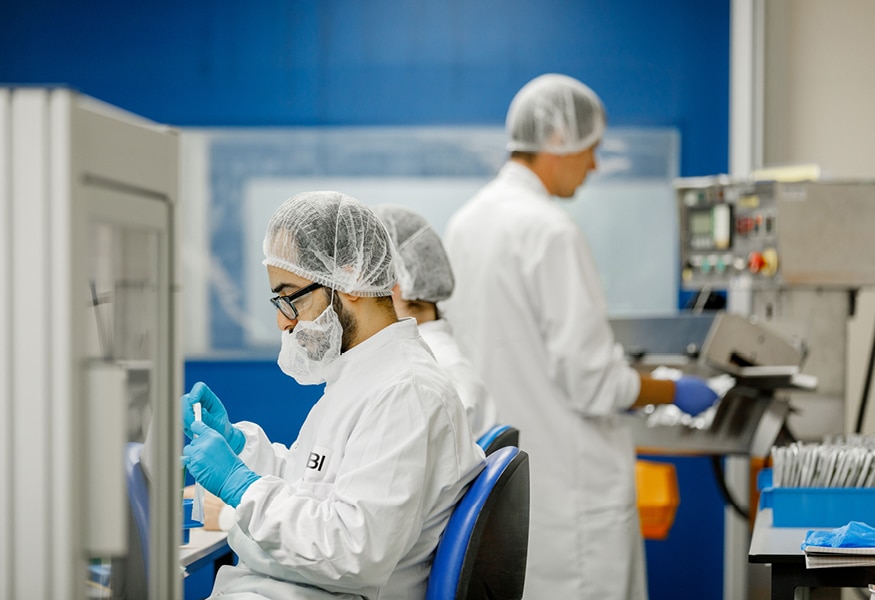
Analyte depleted serum is essential across many IVD assay development, calibration, and research applications. It provides a matrix that accurately reflects human serum while containing analyte levels below the reference range, enabling precise definition of assay linearity, dose-response behaviour, and limit-of-detection performance.
In most IVD systems, the standard matrix for analyte measurement is human serum or plasma. When alternative artificial matrices are used, missing biological components – such as albumin, immunoglobulins, and other plasma proteins – can introduce significant inaccuracies. To ensure results that are truly commutable with patient samples, depleted serum is required.
Depleted serum is also valuable in serological applications, where the goal is to measure the host immune response rather than the analyte itself. A low-level or negative serum base ensures consistent negative results across infectious disease, autoimmune, and allergy assay formats.
Why Depleted Serum Is Needed in Diagnostics
Linearity and calibration studies

Sensitivity and LOD/LOQ determinations

Negative control development

Method validation

Serological assay baseline performance

BBI Depleted Serum - Made to Your Requirements
Most BBI depleted serum products are produced to order, as assay sensitivity and LOD requirements vary.
We also maintain stock of commonly requested variants.
A customisation service is available for depletion types not listed, subject to minimum order value.
Core Competencies
Our product range includes enzymes for biosensor, immunoassay, clinical chemistry, molecular and pharmaceutical applications with a range of different grades to suit all applications.
We aim to develop, manufacture and supply high quality enzymes which meet both customer and regulatory requirements.
We use quality raw materials, innovative production methods and product formulations to achieve maximum stability for our products. We test our products regularly to ensure this remains consistent.
If one of our off-the-shelf products does not meet your requirements, we can offer custom development and manufacturing services to deliver an enzyme to your specification, perfect for your application.
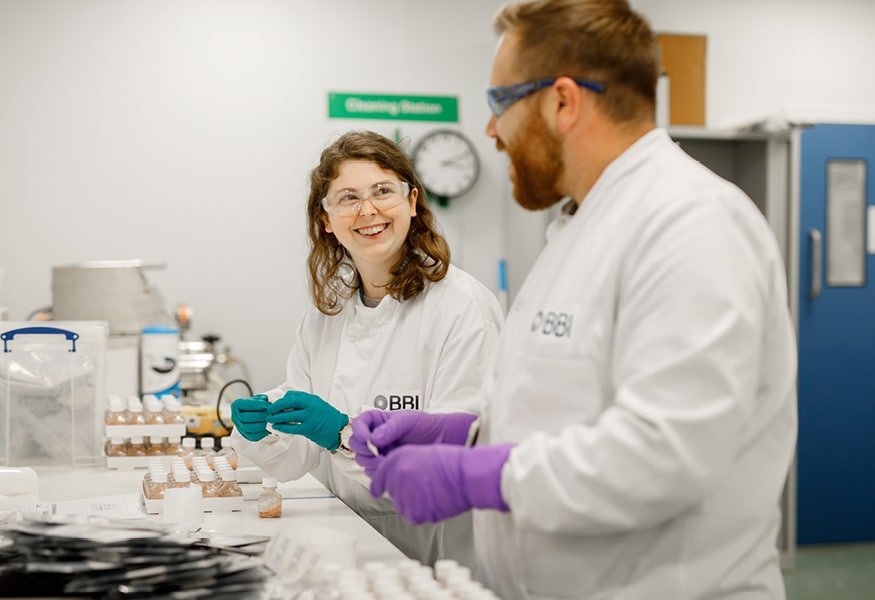
BBI's Capabilities
Specialists

We have extensive experience in sourcing raw materials worldwide
Salt/solvent fractionation

Batch sizes of up to 5,000 litres
Chromatography

Ion exchange chromatography, affinity chromatography, size exclusion chromatography, hydrophobic interaction chromatography
Crystallisation

Highly effective protein purification using solvent and aqueous media
Ultrafiltration

Volumes of 2,500 - 30,000 litres
Freeze drying

Capability of 49 - 420 litres per cycle
Quality control

In-process analysis and monitoring, development of assay/test procedures
Product handling/sampling

We offer special packing according to customer specifications